12 Items you can store indefinitely that won't expire.
How to Correctly Store Your Food, Food Storage Part I Posted December 3, 2010
Survival Food Storage | Tags: food storage, how to can vegetables, how to store food, survival food storage, survival seed bank
If you have planted your survival seed bank and begun harvesting your own food, then you are well on your way to self-sufficiency and long-term survival. But obviously, your garden is not going to produce at all times of the year. And when disaster strikes, the garden itself may be destroyed. So if you are not putting food in storage correctly, then you are missing a huge element of emergency planning and survival.
Now, on to the basics.
How to Store Food
How to store in 5lb buckets
*Plastic buckets- Generally speaking, I use food grade plastic buckets to store all my dry goods. There is some controversy over whether plastic can be used to store food long-term. Before purchasing a supply of buckets, contact the manufacturer to ensure that they are intended for food storage and not chemicals or solvents. Restaurants use plastic buckets for food storage all the time, so if you’d like you can even contact a local restaurant to see if you can get some used ones for cheap or free. When filling a plastic bucket with dry goods, such as wheat, rice, or beans, stop periodically and gently shake the bucket to get the contents to settle. Fill it all the way up to within 1/2 inch of the top of the bucket. This will reduce the amount of air that stays in the bucket, and reduce your chances of spoilage.
*Oxygen absorbers- Before you start storing food, you should definitely order some oxygen absorbers. You can get 500 of them for just about 15 bucks. I place 3 or 4 of these in each 5-gallon plastic bucket that I use for dry goods. These are extremely useful, since foods that are stored without oxygen last much longer. The trick in to place the oxygen absorbers in the bucket on top of the food, then quickly nail on the lid with a rubber mallet to create a tight, leak-free seal and a partial vacuum. This leaves the food in an atmosphere of 99% pure nitrogen. A tip to getting your oxygen absorbers to last a long time before using them is to store them appropriately. Remember that once you open the package, they will start to absorb oxygen around them right away. Keep your unused oxygen absorbers in a glass jar with a tight-fitting lid.
How to store/preserve food in glass jars.
*Glass jars- For fruits and vegetables, you really can’t beat old fashioned canning in glass jars. Glass jars are cheap to buy, and easy to use and sterilize. You can refer to my blog A Good Reason To Can Your Own Vegetables for links to sites that will guide you through your first canning experience. Once you have done it a few times, you will have committed the process to memory. You may find instructions online for refrigerator pickles, such as in my Lacto-Fermentation blog. It is important to note that these methods are for quick consumption, not long-term storage. Fruits and vegetables that you will to store for long periods of time must be canned using a heat process, or dried and vacuum packed.
1450 Seed Banks Available
3 items you'd never think of to stockpile for SHTF or Economic collapse Plant Twist for growing stalk items/holding plants up etc.
Hoodoo Medicine is a unique record of nearly lost African-American folk culture. It documents herbal medicines used for centuries, from the 1600s until recent decades, by the slaves and later their freed descendants, in the South Carolina Sea Islands. The Sea Island people, also called the Gullah, were unusually isolated from other slave groups by the creeks and marshes of the Low Country. They maintained strong African influences on their speech, social customs, and beliefs, long after other American blacks had lost this connection. Likewise, their folk medicine mixed medicines that originated in Africa with cures learned from the American Indians and European settlers. Hoodoo Medicine is a window into Gullah traditions, which in recent years have been threatened by the migration of families, the invasion of the Sea Islands by suburban developers, and the gradual death of the elder generation. More than that, it captures folk practices that lasted longer in the Sea Islands than elsewhere, but were once widespread throughout African-American communities of the South.
Farmer John Boyd Jr. Wants African-Americans To Reconnect With Farming
Come up off the dollars or its no struggle! We can't free ourselves with talk and information sharing. Good points by Dr. Umar Johnson. Short video, must check it out!
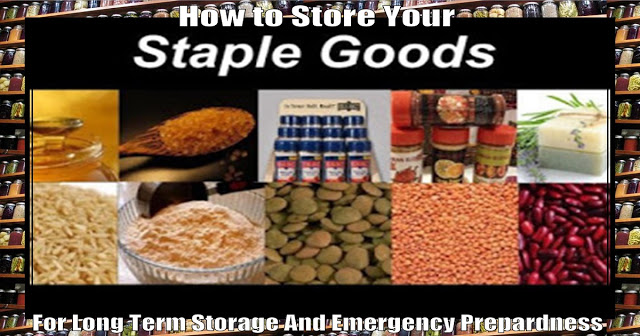
Stock up! Beans Rice Peas Flour and Meal Honey Herbs, Spice and Medicine Candles
John Boyd Jr., with his father, John Boyd Sr. Fred Watkins /Courtesy of John Boyd Jr. As an African-American, John Boyd Jr. might not be what Americans imagine when they think of a typical farmer. But Boyd has been farming his entire life, like his father, grandfather and great-grandfather before him. He grows wheat, corn and soybeans and has cattle at his southwestern Virginia farm. Boyd has been involved in the politics of farming as well. In 2010, he rode his tractor to Washington, D.C., to plead for settlement funds in a long-running lawsuit against the federal government for historical discrimination against black farmers. He also is the president of the National Black Farmers Association. Boyd spoke recently with NPR's Michel Martin about the complicated historical relationship between African-Americans and farming in the United States.
Interview Highlights How he describes his role First and foremost, I'm always a farmer. But I'm always looking to make farming better. So I'm always looking for creative ways to make it better — to find access to markets for African-American farmers and other small farmers. ... I'm a farmer — I love the land. And if you don't love the land and you don't love raising crops, then there's no way possible that you can be a farmer day in and day out because you're not going to get rich farming. Did he ever want to do anything else? My father's a farmer ... and I watched him farm. I watched both my grandfathers farm. My mother's father was a sharecropper. So I watched both of them farm and they taught me how to farm. And I said "Hey, I'm going to be a farmer." I didn't grow up saying I wanted to be a doctor ... a lawyer ... a dentist. I actually wanted to farm. [I] always was excited about land ownership. My father taught me very early on that land is the most important tool that a person can possess. And he taught me if I treat the land good the land will take care of me. He said, "The land didn't mistreat anybody, didn't discriminate against anybody." He said, "people [do]." But if you put down a proper limeseed and fertilizer at the right time, that you can grow just as good a crop as any man. And that brought out the competitive edge in me. So I wanted to take what he was doing and turn it into something bigger and better and more effective. And that's what I've been trying to do. On the 30-year lawsuit against the U.S. Department of Agriculture Basically it was the government discriminating against black farmers. For not lending them money on time, for not processing their loan applications. I always said farmers are faced with acts of nature such as hurricanes, tornadoes and droughts. But you never should be faced with the actual hand of the federal government. They're supposed to give you a lending hand up, and not a lending hand down and mistreat people the way the government mistreated black farmers. On why it matters that black people farm I think it's a part of, a great part of history. I don't care how many generations you go back, you're only one or two generations away from somebody's farm. We all came from the farm. That's why we were brought to this country as black people. We were brought to work the land and clean up the South for scotch-free as slaves. That's why it has a negative impact. And it's because of the bad stigma that we've had because of sharecropping, because of slavery. Our people — black people — die from everything. Heart attack, stroke, obesity. And it's from the foods that we're eating. If we had more black people growing healthy foods — not as a megafarmer, but farming right in their backyard. Growing string beans, onions, all of the vegetables. If you were growing these things and eating more healthy foods, we wouldn't have some of the illnesses that plague us. I think if we got reconnected with the farm, everything would be better. I would like to see our people go back to land ownership — get back to communities where we came from and really start doing some positive things.
For only $15.00 a month you can help Gullah Gee Chee Farmers, AAFIN Farms of Oyotunji African Kingdom Village, Nation of Islam Farms, or choose to support a local Black Farmer in your area. Every little bit helps farmers stay a float, pay outstanding taxes, survive a tough harvest, overcome drought or expand their farm. Click links below, to support Gullah Gee Farms or Oyotunji African Village Kingdom farming operations.
We continue to stress food and medicinal herbs as the beginnings of Nationalism. With this comes support of the farmer, especially our Black farmers, the Gullah Gee Chee farmers, and many Black farmers throughout the United States, have fought to keep their land and get a fair price for the crops on the open market. We encourage you to support Black farmers, get to know them, because one day soon we will need to show us the way to survive off the land again.
The Black Farmers and Agriculturalists Association –Florida Chapter was formed under the national Black Farmers and Agriculturalist Association organization of Tillary, North Carolina. The Florida Chapter was organized as a nonprofit 501 (c)(3) corporation on April 2, 2011. Here is their donation page, please be kind and give to a worthy cause. BFAA
Here is a whole list of Black Farmers, follow the link and get to know the growers. GrassRoots Businesses
We advise that you do not take this information lightly but use it to grow and learn about farming your own food. You can begin planting seeds in pots in your home, start a local community garden or purchase land, an acre or two and start your very own farm. We wish you the best in whatever route you should choose to take and pray you are successful.
Remember food can be a source to free you or control you. The choice is always yours, as you have been told. Love, Sango.
***Recommended Collection Book*** Learn to heal yourself and family Self Reliant Medicine Hoodoo Medicine: Gullah Herbal Remedies GULLAH HERBAL REMEDIES Hoodoo Medicine is African American natural healing. Its roots go back centuries to the first enslaved Africans who brought knowledge of healing plants with them and learned more from the American Indians and European settlers they lived among. The book Hoodoo Medicine describes in rare detail the plants and herbs historically used by the Gullah (also called the Gullah Geechee) of the South Carolina and Georgia Sea Islands, or Low Country. About the author. Faith Mitchell earned her Doctorate in Medical Anthropology in 1980 from the University of California, Berkeley. She is the President and CEO at Grant makers In Health. Formerly, Mitchell was a senior staff member of the National Academy of Sciences in Washington, DC, the Senior Coordinator for Population in the Bureau of Population, Refugees, and Migration in the US State Department, and a program officer at the Hewlett and San Francisco foundations.
Keyhole gardens for better nutrition and livelihoods
Keyhole Garden - How to make an African style raised bed Build with what you have!
Design
Keyhole Garden - How to build a Keyhole Garden / Raised Bed Vegetable Patch Build with bricks!
Summary
A keyhole garden (so-called because of its shape) is a round raised garden, supported with stones. Keyhole gardens are built in places where it is difficult to build normal gardens (rocky areas, shallow arid/or compacted soils, etc), near the entrance of dwellings to facilitate their watering with household waste water. Keyhole gardens are made with low-cost locally available materials. The production of a keyhole garden can be enough to feed a family of 8 persons. Such gardens can produce food all year round even under harsh temperatures and can support the production of at least 5 varieties of vegetables at a time - thus supporting dietary diversity. Compared to regular vegetable gardens, keyhole gardens require less labor (ideal for elderly, children or sick persons), less water and no costly fertilizers or pesticides. They act like an organic recycling tank, using your food and garden waste as fuel to grow vegetables! Crop rotation and growing of insect-repellent plants are important to balance nutrient demands, fight insects and plant diseases, and deter weeds. When a project introduced keyhole gardens in Lesotho, neighbouring villages outside the project intervention area were reproducing keyhole gardens on their own initiative, clearly indicating the success of the intervention and its potential sustainability.
Description
The advantages of using this technology:
Keyhole gardens are built in places where it is difficult to build normal gardens (rocky areas, shallow arid/or compacted soils, etc). They are built with low-cost materials easily retrieved locally. It is a labour-saving and organic technology that requires little inputs, and can feed a family of eight for 5 to 7 years.
The construction of keyhole gardens is considered to be implemented by the whole community to alleviate the burden on orphans and vulnerable children, the elderly and the chronically ill. Through participatory approaches, beneficiaries are involved in all stages of project activities: planning, implementation, monitoring and evaluation, thus ensuring appropriation of the approach and strengthening community networks.
The building process:
2.1 To make a keyhole garden you will need some very simple items:
Soil, compost
Strong string
Straw or something similar
Worms
Well rotted manure and wood ash
Large stones, bricks or logs
Scrap metal (old cans, etc.)
Several sticks or 1.5meters canes
2.2. How to build it:
1.Find a space near your house that’s about 3m2 and make sure that there is enough sunlight and it is located closely to access to water.
2. Clear the space of weeds and dig it over.
3. Measure out the arm span of whoever will use the garden with some gardening twine. Halve this length and then add another 30cms – this is the radius of your garden (you can make any size you like, however!).
4. Tie a stick to each end of a string, plant one in the centre of your space and use the other end to draw your circle in the ground.
5. Draw out an entrance triangle to your keyhole from the edge of the circle to its centre, starting at a width of two feet.
6. The first layer of soil has to be dug out, leveled and covered with multiple layers of locally-made compost (manure, organic waste, scrap metal, wood ash, plant waste, yard sweepings, etc).
6. Take four long sticks (at least 1.5m long) and well plant them firmly in the ground to mark the angles of a square well at the center of your circle. The sides of the square should be about 30-40cm long. Next, lash the sticks horizontally along the base, middle and top to create your well – it should reach a height of about 1.3 meters, or at a level that can be reached by the person(s) that will work on the garden.
7. Place large stones around the perimeter of the garden, remembering to create the entrance to the well.
8. Line the inside of the well with straw (to keep the compost from falling out, but allowing water to filter) and then fill with a successive layers of scrap metal, soil/manure, straw, grass and leaves, ash, soil/manure and so on, until the well is about two thirds full. This central well serves for irrigation purposes: water will be poured in it from the top, allowing for its dispersal through the whole enclosed garden (see pictures below).
8. Once the central well is filled, you can start filling the garden with the same technique used for the central well. Also, if you can include some worms, they’ll help keep the soil fertile. Whilst you are filling these layers in, you will need to progressively build the garden’s perimeter wall with large stones– effectively making a dry-stone-wall that holds in the layers. Remember to consider a height that the person in charge of maintaining the garden can comfortably reach, and to ensure that the perimeter walls lean very slightly towards the centre of the garden, for a greater stability. The wall can be made sturdier by packing small pebbles, stick and mud into the gaps.
9. The last layer of soil on top of the raised garden should be shaped as a mound, which slopes away from the well – this increases the surface area that you can plant on, and allows the runoff of excess water.
11.You can segment the planting area into different crop areas to enable you to rotate them next season. This will allow you a grow a greater diversity of food crops and will benefit your garden’s fertility.
You may divide your planting area into 4 parts allocated for: 1) leafy plants; 2) root crops; 3) peas and beans (or other legumes) while the fourth section stays fallow, covered by a thick layer of manure and mulch. Crops should preferably be part of the local biodiversity, and chosen according to their nutrient content and potential for inclusion in diets. Each planting areas is separated from others by a line of medicinal and insect-repellent plants. Systematic retrieval of knowledge and experience of local populations have to be applied: nobody knows the constraints and opportunities of their environment better. Crops should rotate in turn approximately every two months. Or, if you are a seasoned gardener, you will know how to do some intercropping and companion planting (find useful advice: http://www.sendacow.org.uk/africangardens).
12. Irrigation: to irrigate your garden, pour water directly in the central well from above. You may use grey waters from household use. The water will now permeate the garden and water the roots of your crops with lots of great nutrients.
13. Composting: Use uncooked, organic food-waste to create a compost heap or put them straight into the central well in warmer months, to increase fertility. Putting a lid over the top of the central well (made with an old carpet or a plastic bag) will help retain heat, reduced evaporation and speed up the composting process a bit.
The keyhole garden structure ensures soil fertility for 5 to 7 years.
Supporting all these worldwide fundraisers would cost about 50 U.S Dollars. Give as much as you can, it all goes to support infrastructure for African American communities.
Our main donation page at OyoTunji African Village. We are raising $15 dollars per month via 100, 000 brave lionesses and lions, who are ready to support a Black Nationalist economy. $127,000,000 million in 7 years, lets keep it going strong. Click here:
Help save Gullah Gee Chee land. Fighting hard for African liberation since the 17th century, descendants of Angola, the Gullah Gee Chee people, managed to preserve some of their native tongue, their ancestry culture and pride. From slave revolts to freeing other slaves, civil rights struggle, Pan-Africanism, many of the members of the famed, "Emanuel African Methodist Episcopal Church" of Charleston are Gullah Gee Chee descendants. Because of the low state of economy of South Carolina's Low Country, government seizure of their lands and vicious taxation, many Gullah people are losing their lands. But you can help them out with a small donation. Here is their GoFundMe page: https://www.gofundme.com/panafricanfamilyem
He is raising $5 Million dollars for a high tech private school for our young boys. If we could reach 300,000 people this would give Dr. Johnson his $5 Million for the school. A girl's school would be the next ideal mark and also Queen's club where our women can gather for they are the leaders of the family's interest.
Also support the Collect Black People Movement. They have a .27 a cent day, $8.10 fundraiser a month, they already have a thousand people signed up. Click here: http://www.cbpm.org/neweconomicplan.html
Much love for my believers on the Nation of Islam they also have a fundraising that's set at .30 cents day, about $10.00 a month. They are shooting for 16 million people, trying to raise about 250 million in a year. Click here: http://www.economicblueprint.org/
Empire Washitaw De Dugdahmoundyah. The Nation of ancient American Mound Builders they came before Columbus from Africa on Egyptian boats. Africans were sailing the seas for thousands of years. The Washitaw are ruled over, like the Gullah, by a Queen Mother, Her Highness Devine: Empress Wendy Farica Washitaw. Please show your support for their nation. We are only as strong as our weakest link as African Diaspora. The Washitaw donation page: http://empirewashitaw.org/index.php?p=1_15_Make-a-Donation ----------------------------------------------------------------------------------------------------------------------------------------------------------------------------------------------------------------
Please support all these Black Nationalists efforts to provide true economic freedom and total liberation for all African Diaspora. The hand has five fingers and they all must be strong, work in coordination, to build a stronger Diaspora.
Henry Garnett said, "If we are to bleed, then lets bleed all at once.
Those who have it to give should give large amounts. In the upper ranges of $250.00 one time. If we can get 10,000 people to give $250 that would be $2.5 Million to complete , His Royal Majesty Oba Adefunmi II's 7 year plan, all in month. So give now! Up you Mighty Nation-----------------------------------------------------------------------------------------------------------------------------------------------------------------------
Queen Mother of Africa, Her Royal Highness the Nnabagereka (Queen) of Buganda, Sylvia Nagginda Luswata. Please give $1.00 per household member and show your support for women and children of Africa. As we know women suffer the greatest on the weak political platform of Africa and children die in record numbers. The Queen Mother makes 3/4th of the Africa world, women and children, her first priority. Her example must be followed worldwide, Her Royal Highness the Nnabagereka (Queen) of Buganda, Sylvia Nagginda Luswata, is bringing is the change of Africa. Donate: http://www.nnabagereka.org/en/
Our goal is $1 Billion, raised by all Africans worldwide, all languages and all ethnic groups.